Reflections from COP30: Land governance, climate gains and quiet wins
By Rebecca Smith and Sanjana Bahadur
This year’s COP negotiations and outcomes prompted wide-ranging debates. Yet beneath the big headlines, important progress was made on linking land governance to climate resilience.
In this blog, Tetra Tech’s Rebecca Smith, Senior Manager, and Sanjana Bahadur, Assistant Manager, reflect on their COP30 experience as part of the Land Facility team.
Land Facility at COP30: Land governance is climate action
Hosted in Belem, Para, ‘the heart of the Amazon’, COP30 convened a broad variety of actors to engage on critical climate conversations with a real focus on integrating Indigenous Peoples and local leaders into the conversations. With delegates ranging from political negotiators, civil society, academics and the private sector to interested parties, students and local indigenous people, the scale was enormous – some 20,000 visitors came to the Green Zone each day.
The Land Facility, funded by the FCDO and implemented by Tetra Tech, aims to strengthen land governance, partnering with countries to accelerate progress towards strengthening land tenure security and transparent, equitable markets through strategic partnerships.
Representing the Land Facility, we had the sole aim of making the case that land governance is central to climate action. Well-governed land – that respects the rights of Indigenous Peoples and Local Communities – not only supports sustainable land use, but also more stable supply chains, secure land tenure and better biodiversity outcomes. Climate action cannot be achieved without discussing land, so securing land tenure was a political and financial priority at COP30.
The Land Facility hosted two events to this effect. We facilitated technical exchanges between 10 countries on securing tenure at scale for climate action. Experiences and priority actions in land governance systems were shared from Colombia, Brazil, and Indonesia, amongst others. In partnering with the Global Action for Land and the Forest Climate Leaders Partnership, our event celebrated the commitments made around COP30 to secure land and forest tenure and governance rights of Indigenous Peoples and Local Communities as key to protecting forests and biodiversity and achieving climate goals.
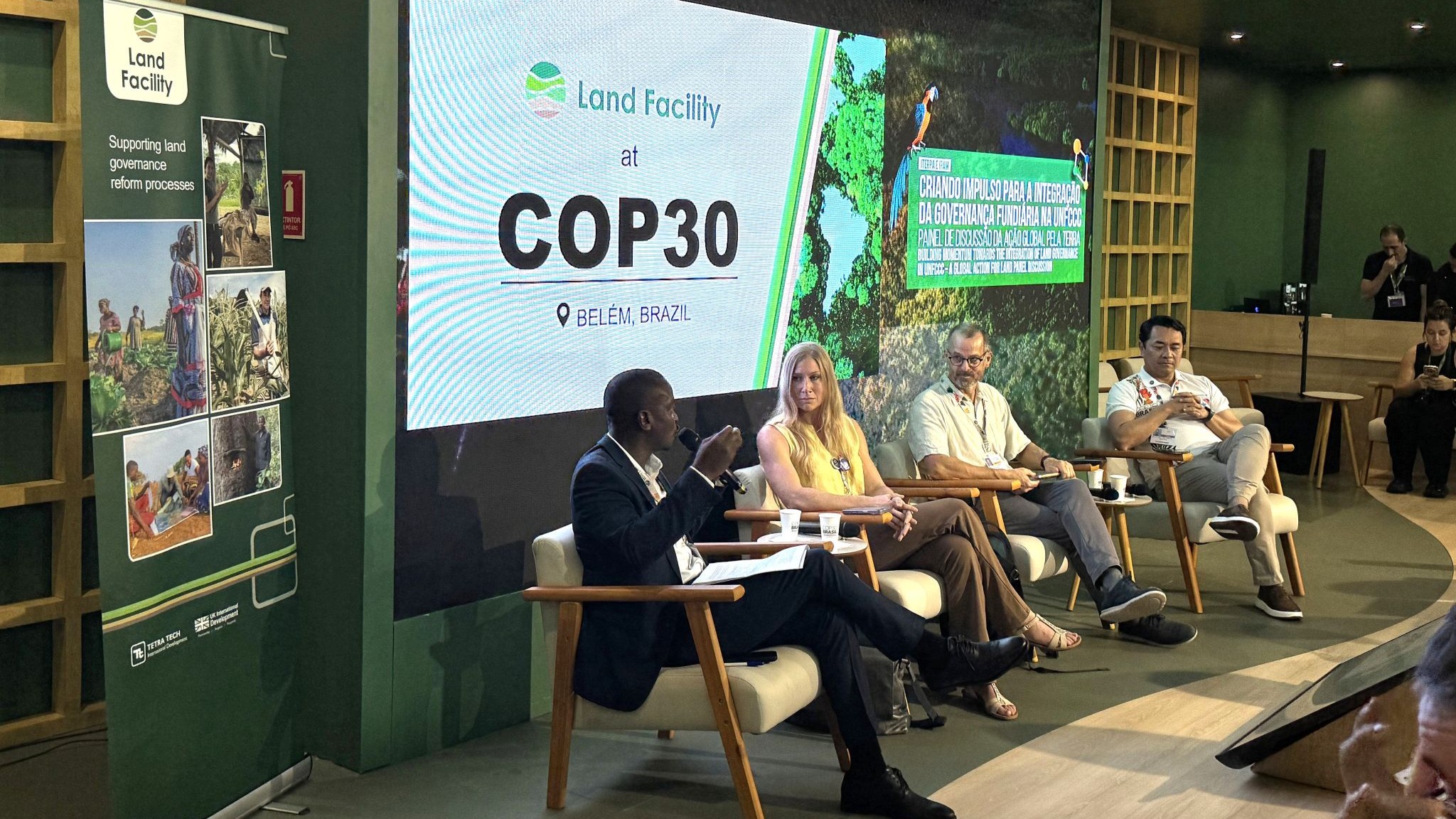
At the Amazon hub in the busy Green Zone, we hosted a multistakeholder discussion on building momentum towards the formal integration of land governance reforms into the UNFCC framework. With a packed-out audience, this event brought together important perspectives from Para state itself, with Landesa’s Stand for Her Land, RRI and Global Action for Land.
18 months into our work on the Land Facility, it was rewarding to see land rights being discussed as a key driver for sustainable climate action on such a global stage. It’s true that land matters.
Taking steps in the right direction
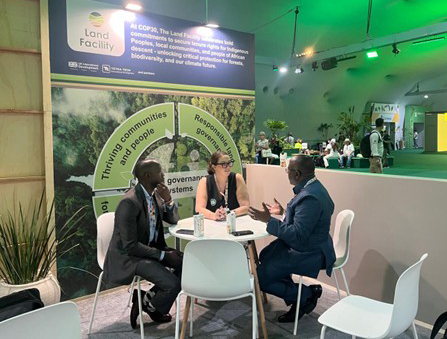
Rebecca Smith in conversation with two members of NEPAD/APRM Kenya Secretariat under the National Treasury and Economic Planning.
Amongst the big headlines and our own packed agenda, it’s easy to miss the commitments made on land rights, land tenure and land governance.
Two milestone land tenure pledges were affirmed and celebrated at COP30 – the Intergovernmental Forest Tenure Commitment and the Forest Tenure Pledge 2.0. Both highlighted the need for good governance systems to deliver sustained results for the climate and for communities who depend on land the most.
We were honoured to be in the room when Sonia Gujajara, Minister for Indigenous Peoples, Government of Brazil, Ruth Davis, UK Special Representative for Nature, and others from civil society, funders, governments and indigenous leaders came together to reflect on and celebrate the new commitment and renewed pledge.
Land reform doesn’t happen overnight. But the conversations, commitments and inclusion of indigenous voices at COP30 were a meaningful step forward.
Personal reflections
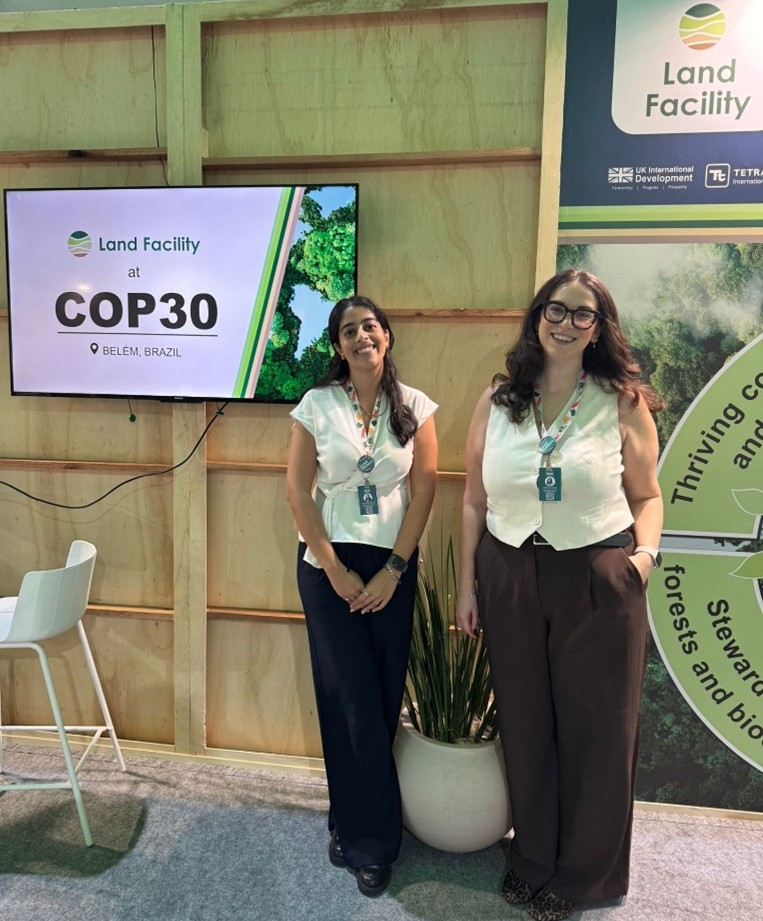
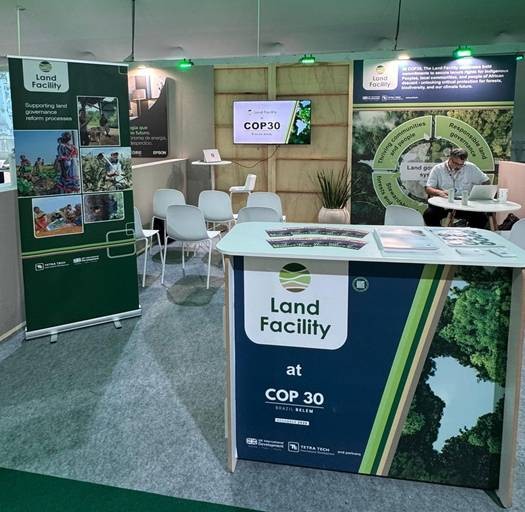
Sanjana and Rebecca at the Land Facility COP30 booth
As one of the only FCDO-funded programmes in attendance, we weren’t quite sure what to expect from our very first COP. But after 10 days of networking, event management and holding the fort at our very own booth, we needn’t have worried.
After such a turbulent year in global politics and development aid, we came away with a renewed feeling of optimism that land governance and Indigenous People’s tenure rights are headed in the right direction. Engaging with interested students, government representatives and the local people of Para alike, we return to London with new momentum and clear next steps which we will take forwards into our projects in Brazil, Ethiopia, Indonesia, Zambia and beyond.
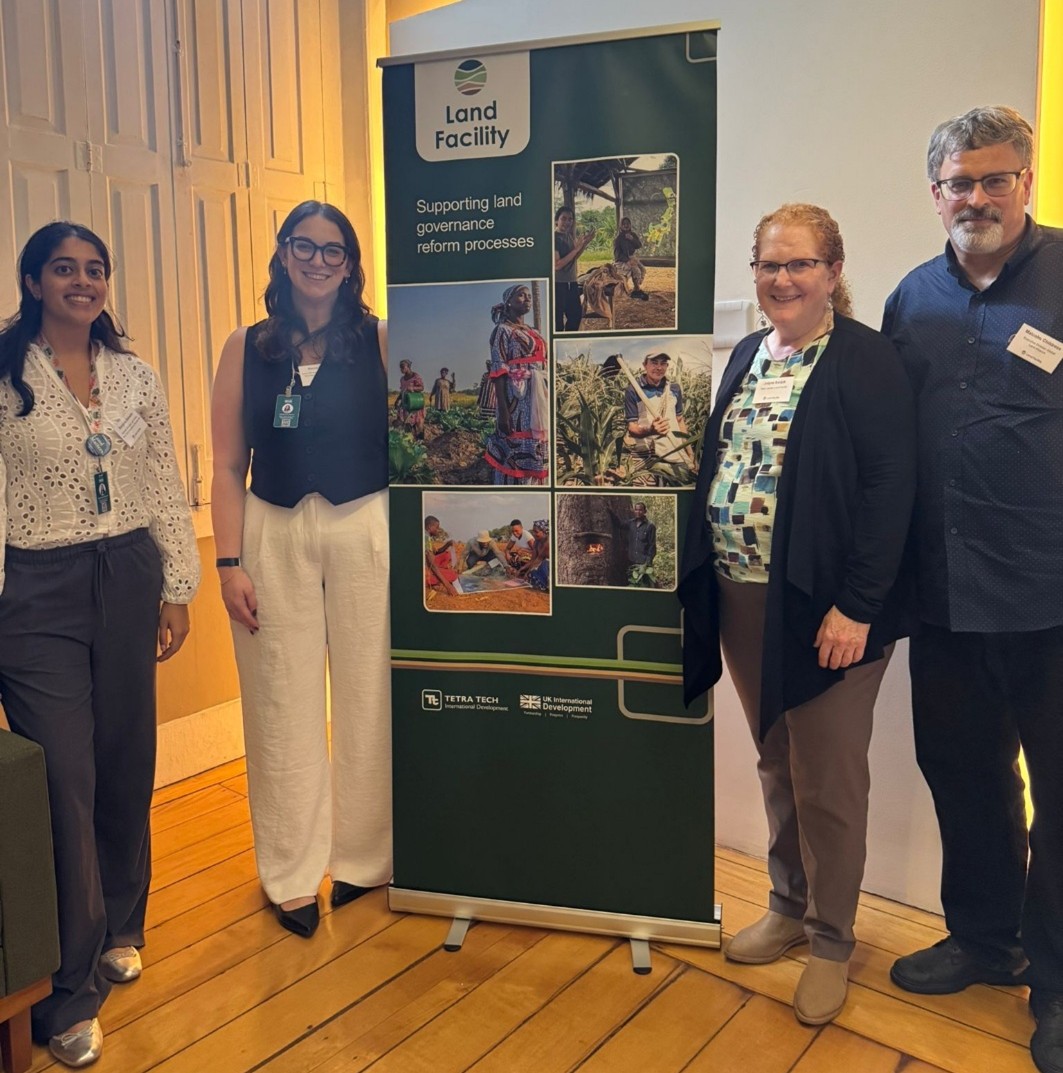
(Left to right) Sanjana Bahadur and Rebecca Smith with Jolyne Sanjak, Land Facility Team Leader, and Malcolm Childress, Executive Director at Global Land Alliance