About SPRiNG
SPRiNG works with government institutions, civil society organisations, traditional and religious leaders, women’s and youth’s groups to strengthen peacebuilding systems, enhance resilience, and support evidence-based decision-making across North-West and North-Central Nigeria. It is funded by the UK Foreign, Commonwealth and Development Office (FCDO) and implemented by Tetra Tech International Development in partnership with Nextier SPD, the Centre for Democracy and Development (CDD), and the Centre for Humanitarian Dialogue (HD).
Bridging the gap between community-level practice and high-level policy
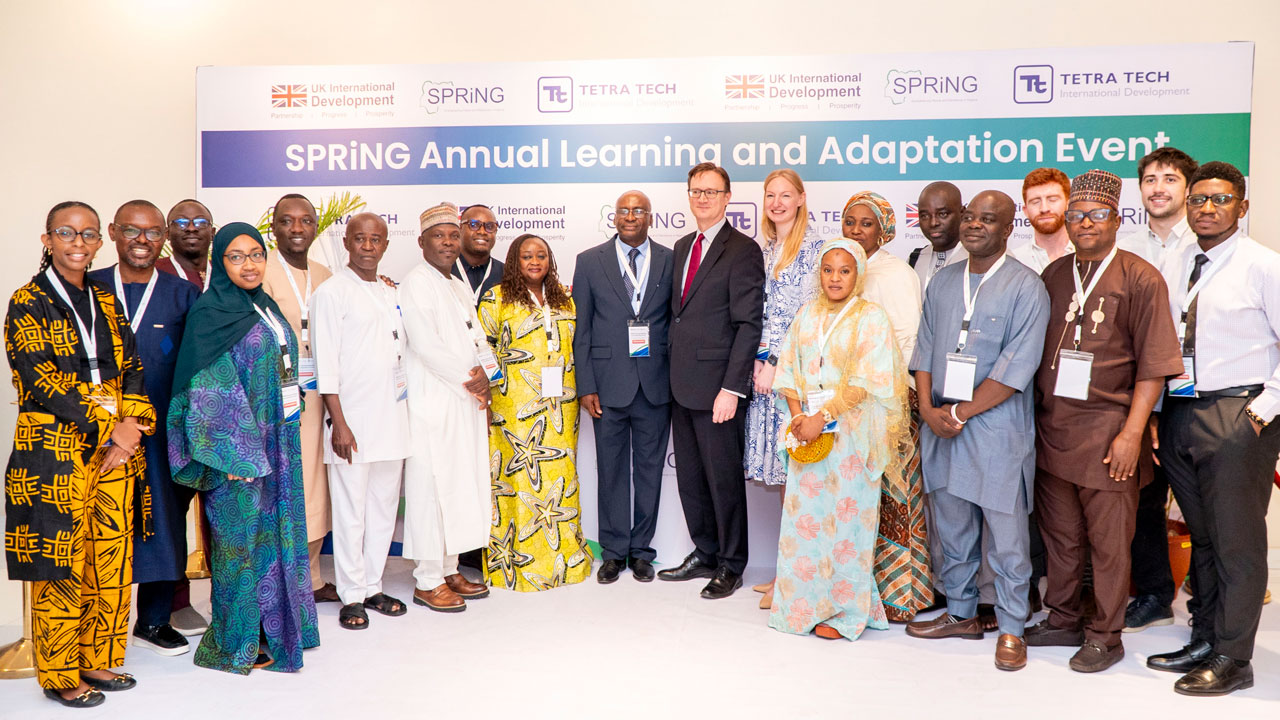
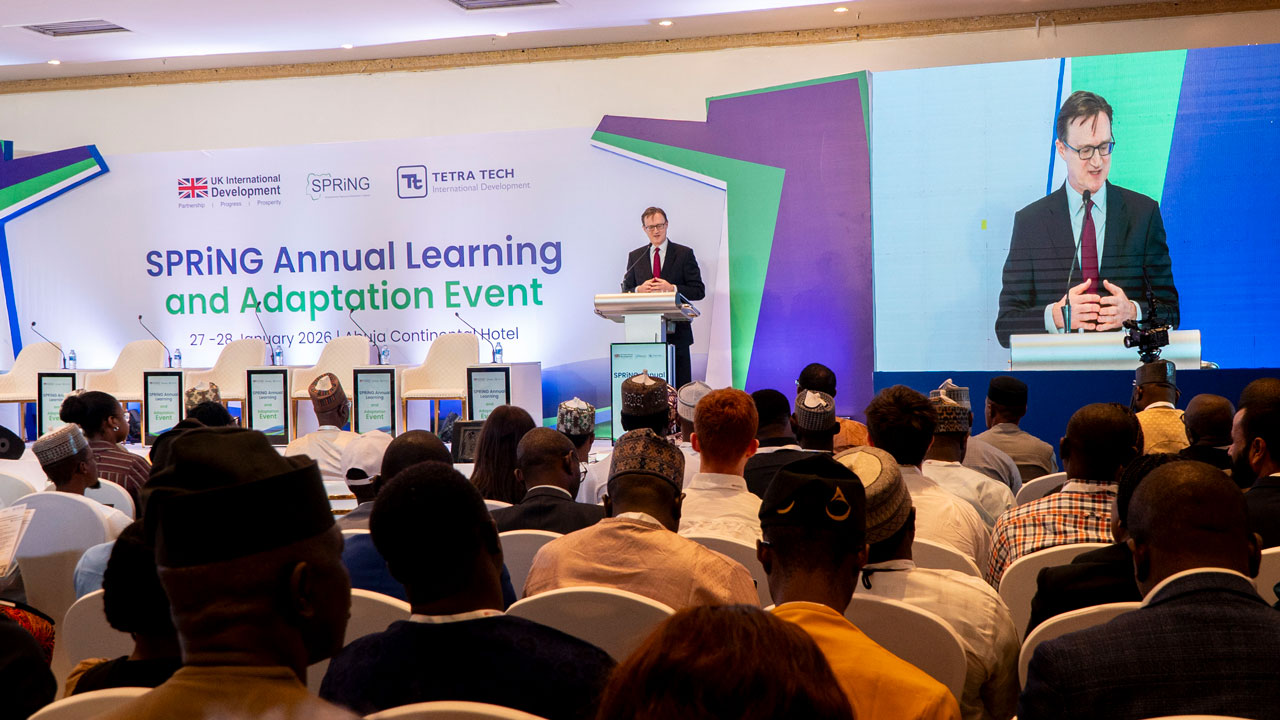
The event opened with keynote remarks from H.E. Dr. Richard Montgomery, British High Commissioner to Nigeria, who reaffirmed the UK’s commitment to evidence-driven interventions that strengthen institutions and sustain stability.
We designed SPRiNG not just to deliver projects – it was designed to generate insights and share lessons so that peacebuilding in Nigeria can be spread.
H.E. Dr. Richard Montgomery, British High Commissioner to Nigeria
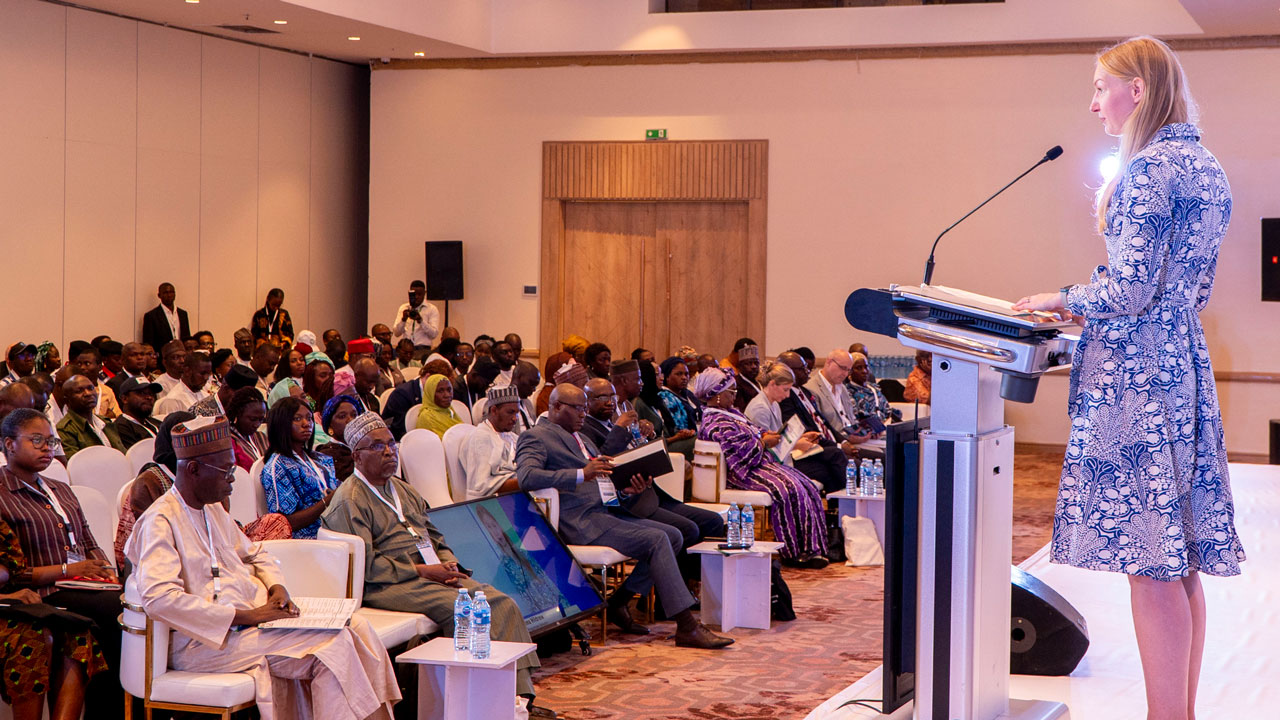
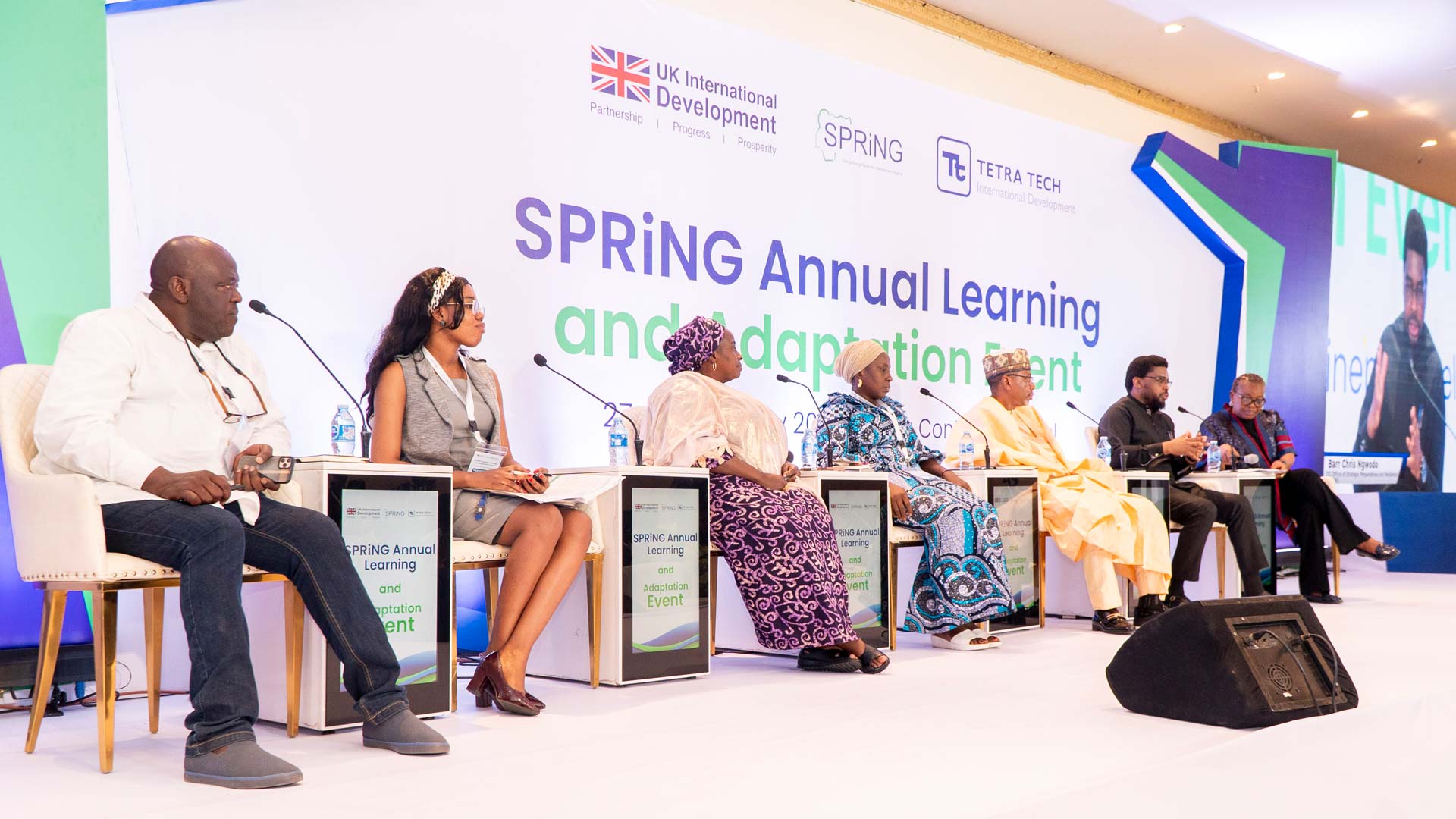
Over two days, participants engaged in high-level policy discussions, strategic reflection and adaptive planning, concentrating on how successful peace models can be embedded in formal systems while interventions remain relevant and context-specific. These talks prioritised how to strengthen evidence-driven decision-making, highlighting the intersection of social inclusion and economic resilience, stability and climate adaptation.
A central theme of the event was mainstreaming the Women, Peace and Security (WPS) and social inclusion agenda across SPRiNG workstreams – recognising that lasting stability depends on the active participation of women, youth and persons with disabilities.
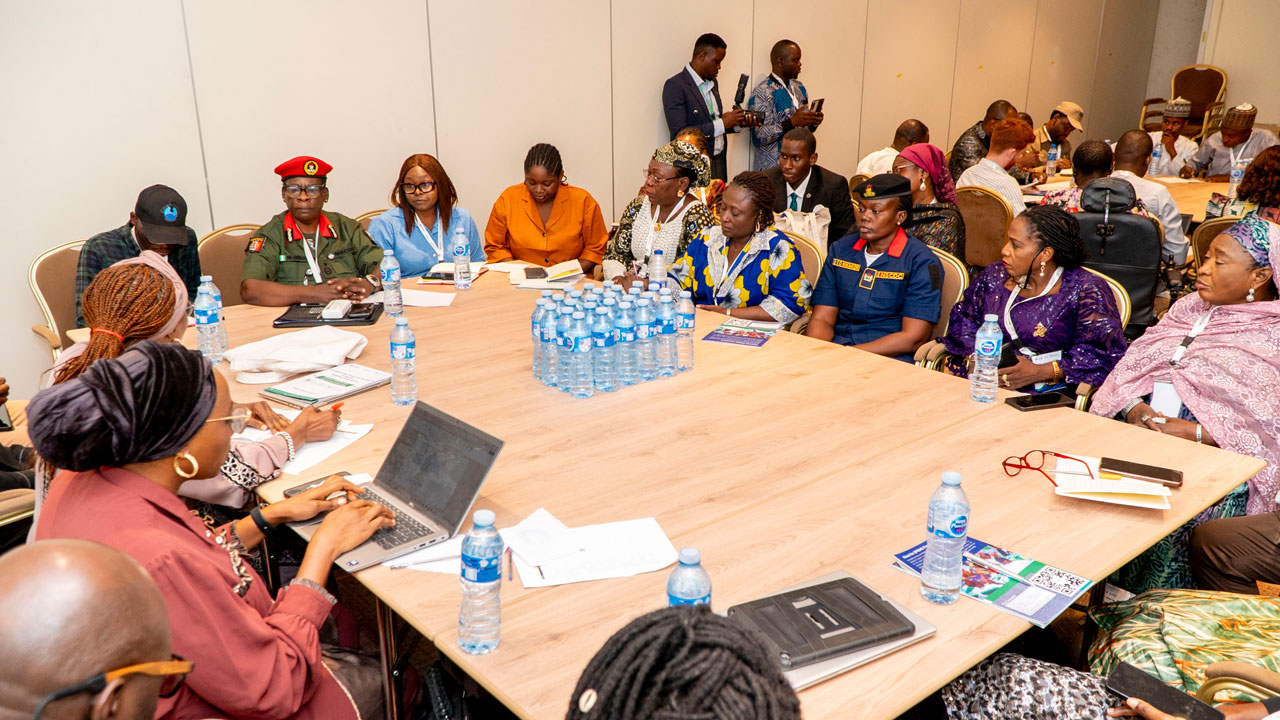
Interactive sessions identified programmatic pivots, sharpened state-level cohort plans, and generated concrete follow-up actions to institutionalise successful approaches and strengthen monitoring and adaptive learning.
Moving forward
The event demonstrates SPRiNG’s commitment to turning learning into action by synthesising insights, sharing achievements and strengthening relationships for a more peaceful and resilient Nigeria.
As SPRiNG moves into the new year, the team will continue to strengthen the systems, relationships and evidence required to reduce conflict, build resilience, and support sustainable peace by turning learning into action, and ensuring peacebuilding efforts remain locally owned, inclusive and sustainable.
At the end of the day, we hope that we’ll have a more stable and peaceful Nigeria in which Nigerian citizens benefit from the results of reduced violence and increased resilience to the pressures of climate change.
Dr. Ukoha Ukiwo, SPRiNG Programme Team Leader