
The latest news, wins, and reports from Tetra Tech’s EU team, supporting the European Union through robust evidence, monitoring, and research.
Our latest wins
Developing evidence-based foundations for a possible EU Rare Disease Action Plan
Tetra Tech is supporting the European Parliament in developing evidence-based foundations for a possible EU Rare Disease Action Plan. Through a European Added Value Assessment (EAVA), we are contributing to the preparation of a legislative own-initiative report (INL), identifying where coordinated EU action could deliver meaningful impact for people living with rare diseases.
The study examines how stronger EU-level coordination could improve the lives of the estimated 27-36 million people living with rare diseases in the European Union. Despite two decades of EU action, patients continue to face delayed diagnosis, fragmented care pathways, unequal access to therapies, and significant disparities within and between countries. It identifies priority areas including diagnosis and screening, access to therapies, research and innovation, data infrastructure, patient support, and cross-border governance.
The findings highlight the strategic importance of instruments such as the European Reference Networks (ERNs), EU health data infrastructures, and coordinated approaches to “orphan” and advanced therapies. Overall, the study concludes that a coherent EU Action Plan could reduce fragmentation, improve efficiency, and deliver tangible benefits for patients and families across Europe.
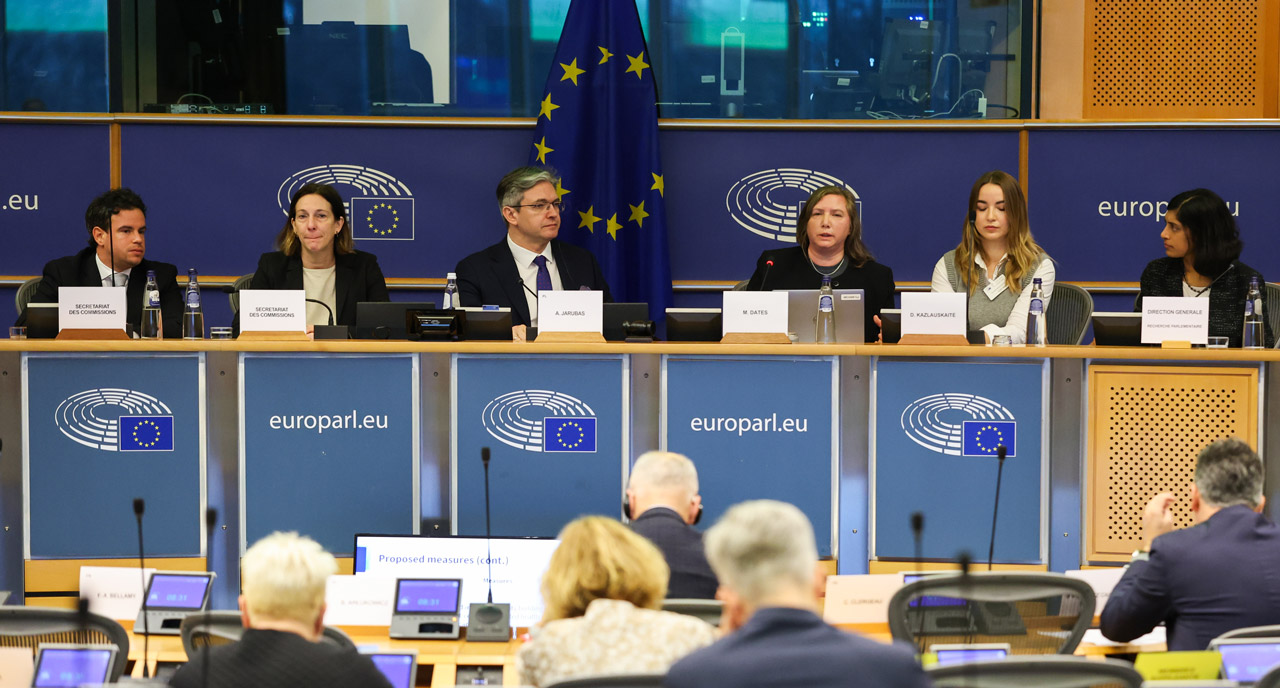
The study was presented to the Committee on Public Health (SANT) on 24 February 2026. Watch the recording of the presentation or read the full study’s findings on how the EU could add value in the field of rare diseases, impacting patients, research and policy
Tetra Tech leads the Final Evaluation of the 2014–2021 EEA and Norway Grants
Tetra Tech was selected to conduct the Final Evaluation of the 2014–2021 EEA and Norway Grants, a €2.8 billion funding mechanism to support 15 EU countries facing economic and social disparities.
Over the past programming period, the Grants have played a distinctive role in addressing economic and social inequalities across Europe, supporting vulnerable groups, strengthening civil society, improving public institutions and fostering inclusive growth. By targeting under-served communities, the Grants have attempted to reduce disparities while reinforcing democratic values and social cohesion.
The evaluation will provide a comprehensive, backward- and forward-looking assessment of how the Grants have contributed to their two overarching objectives: 1) reducing economic and social disparities, and 2) strengthening bilateral relations between the Donor States (Norway, Iceland and Liechtenstein) and Beneficiary States.
We adopt a mixed-methods, theory-based approach, combining desk research, surveys, interviews and field visits across seven case study countries. We will assess performance at mechanism, programme and project levels, covering all priority sectors and programme areas.
In addition to the analytical report, our team will produce four evidence-based narratives highlighting the impact of the Grants in areas aligned with the current priorities: the European green transition; democracy, rule of law and human rights; social inclusion and resilience; and support for Ukrainian refugees and hosts.
The final report will deliver strategic conclusions and actionable recommendations to inform Donor decision-making and the design of future financial mechanisms.
A study on modernised rules for patients’ rights in cross-border healthcare in the EU
Tetra Tech will support the European Parliament with a study on modernised rules for patients’ rights in cross-border healthcare in the European Union. The study will provide an evidence-based European Added Value Assessment (EAVA) to inform a possible legislative own-initiative report by the European Parliament’s Committee on Public Health (SANT). It will examine how the current framework under Directive 2011/24/EU can be strengthened to improve access, simplify reimbursement procedures, enhance digital interoperability, and ensure better quality and continuity of care for patients seeking treatment in another Member State.
Building on Tetra Tech’s previous evaluation of the Cross-Border Healthcare Directive, the research will assess and propose solutions to persistent barriers to patient mobility, including administrative complexity, uneven recognition of prescriptions, limited digitalisation, and socio-economic disparities affecting access.
The study will deliver strategic insights and practical policy options to help ensure that patients’ rights remain effective and future-proof in an increasingly digital and interconnected European health landscape.

Independent evaluation of the PIF Directive by Tetra Tech consortium
Tetra Tech, together with its consortium partners, will deliver an independent evaluation of the Directive on the protection of the Union’s financial interests through criminal law (PIF Directive). This study is an extension of the European Public Prosecutor’s Office (EPPO) evaluation and will be delivered by 26 May 2026.
The consortium will analyse the state of implementation of the PIF Directive and assess its effectiveness, efficiency, relevance, coherence, and EU added value, further underlining Tetra Tech’s experience in conducting rigorous evaluations for the European Commission’s DG JUST.
Sharing our expertise
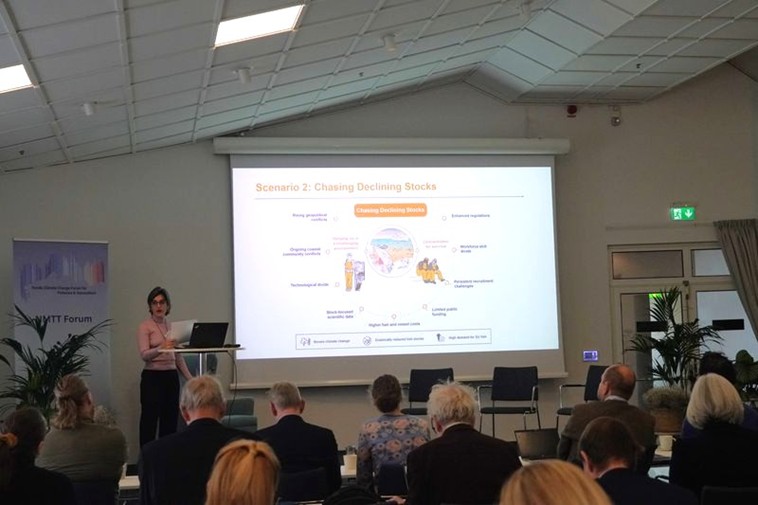
Macarena Davies presenting Fishers of the Future insights at the Nordic Climate Change Forum 2026
In January 2026, Macarena Davies represented Tetra Tech at the Nordic Climate Change Forum for Fisheries and Aquaculture (NCCF26) in Helsingborg, Sweden, where she presented key insights from the Fishers of the Future foresight study. Commissioned by DG MARE and CINEA and led by Tetra Tech, the study is the first EU-wide foresight exercise on fisheries.
Within the panel on “Which Future for the European Fisheries Market?”, the presentation linked the future scenarios developed in the study to current market dynamics, including climate impacts, global competition, shifting consumer preferences, recruitment challenges and technological innovation. The discussion underscored how foresight can support policymakers, industry and regions in identifying preferred futures and designing enabling measures to strengthen the resilience and competitiveness of European fisheries.