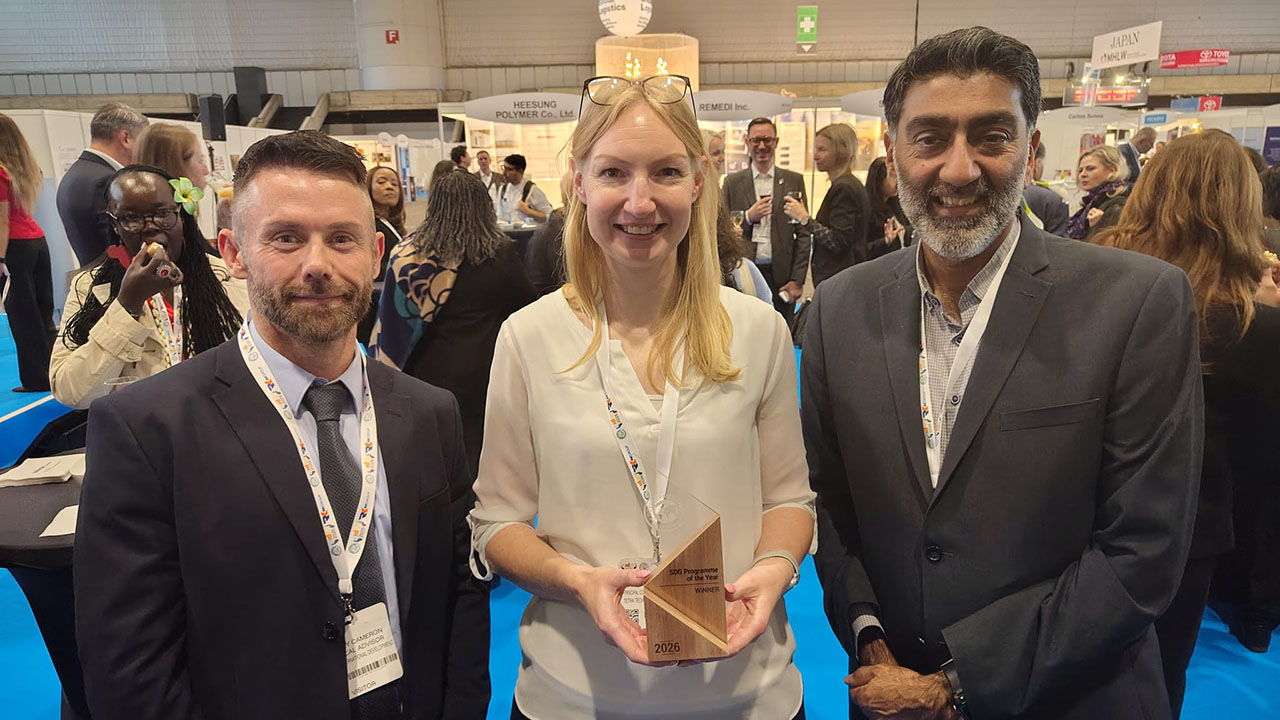
We are very proud that the Strengthening Peace and Resilience in Nigeria (SPRiNG) programme – which we deliver for the UK’s Foreign, Commonwealth and Development (FCDO) – won the SDG Programme of the Year award at the Development 2030 conference in Geneva last week.
SPRiNG addresses the interconnected drivers of conflict and vulnerability across conflict-affected areas of North-West and North-Central Nigeria. Its work focuses on addressing drivers of competition over natural resources, poverty and social exclusion, and limited institutional capacity to effectively manage conflict.
The SDG Programme of the Year award recognises SPRiNG’s contribution to bridging climate action and conflict resolution (SDG 13 and 16), strengthening justice and security institutions (SDG16) and advancing gender equality (SDG 5). This recognition belongs to the SPRiNG team, our consortium partners, implementing organisations and, most importantly, the communities and institutions we are working with to build a more peaceful and climate-resilient Nigeria.
SPRiNG Programme Director, Tetra Tech’s Christina Hildrew, said: “We’re so pleased that the judging panel for the Development 2030 awards has recognised the meaningful contribution that SPRiNG is making towards the Sustainable Development Goals (SDGs). “This award demonstrates how our work with individuals and at community level connects with and feeds into addressing the greatest global development challenges. With sincere thanks and credit to our team, colleagues and partners in Nigeria for their commitment to and continued investment in building a more stable and more peaceful Nigeria.”
This award demonstrates how our work with individuals and at community level connects with and feeds into addressing the greatest global development challenges.
Christina Hildrew, Programme Director, SPRiNG
The programme is already demonstrating what integrated development programming can achieve in a fragile and conflict-affected context. In its second year, SPRiNG delivered more than 100 projects and partnered with over 50 implementing organisations. It supported the institutionalisation of seven national, 12 state-level and 12 local-level policy and legal frameworks covering Disarmament, Demobilisation and Reintegration, Early Warning and Early Response, Alternative Dispute Resolution, Women, Peace and Security (WPS), livestock development and environmental sustainability.
At community level, 20,422 people received training in dispute resolution, community security, climate-smart agriculture and pastoral practices, climate adaptation, and economic and livelihood opportunities. In Benue State, Community Peace Platforms resolved 121 of 142 disputes reported after dispute resolution training. Across target communities, 74% reported improved cooperation between groups in production, shared resource use, tackling threats and addressing common challenges.
These results also illustrate why the Sustainable Development Goals matter. The SDGs provide more than a set of global ambitions. They offer a framework for understanding how development challenges interact and for designing responses that are measurable, inclusive and accountable. In contexts affected by conflict, climate stress, poverty and exclusion, progress on one goal cannot be separated from progress on others.
SPRiNG’s contribution is visible across several goals. Under SDG 5, Gender Equality, the programme empowered 300 women in Plateau State with climate-resilient seeds and tree seedlings, while supporting 16 policies relating to women’s participation in security processes. It also supported 12 local Women, Peace and Security action plans, contributing to the appointment of the first woman in 200 years to the Idoma Traditional Council in Benue State.
As Hon. Justice Kudirat Kekere-Ekun, GCON, Chief Justice of Nigeria, said: “By placing international and regional obligations within Nigeria’s constitutional and legal framework, the Judiciary Guide on Women, Peace and Security provides practical direction for judges in dealing with WPS-related cases.”
Under SDG 13, Climate Action, 57% of supported agricultural and pastoralist groups adopted climate-smart and cooperative practices. Under SDG 16, Peace, Justice and Strong Institutions, SPRiNG is strengthening the systems and relationships required to prevent conflict and sustain peace.
Winning this award is a moment for us to reflect on how we work with communities, partners and the FCDO to deliver programmes that effect real change. This award recognises not only what SPRiNG has delivered, but what becomes possible when peacebuilding, climate resilience, gender equality and sustainable livelihoods are treated as interconnected priorities.