

As if to underline the urgency of global action against climate change, London Climate Action Week (LCAW) 2026 took place during a heatwave that sent temperature records tumbling, some of which had stood for 50 years.
Amid this roasting environment, LCAW remained an important event for us to engage with. The LCAW theme of understanding climate risk and building resilience spoke directly to many aspects of TTIDE work across our projects, and we saw an opportunity to observe, contribute to and participate in the knowledge sharing and crucial discussions taking place throughout the week, lending our international viewpoint to the conversation.
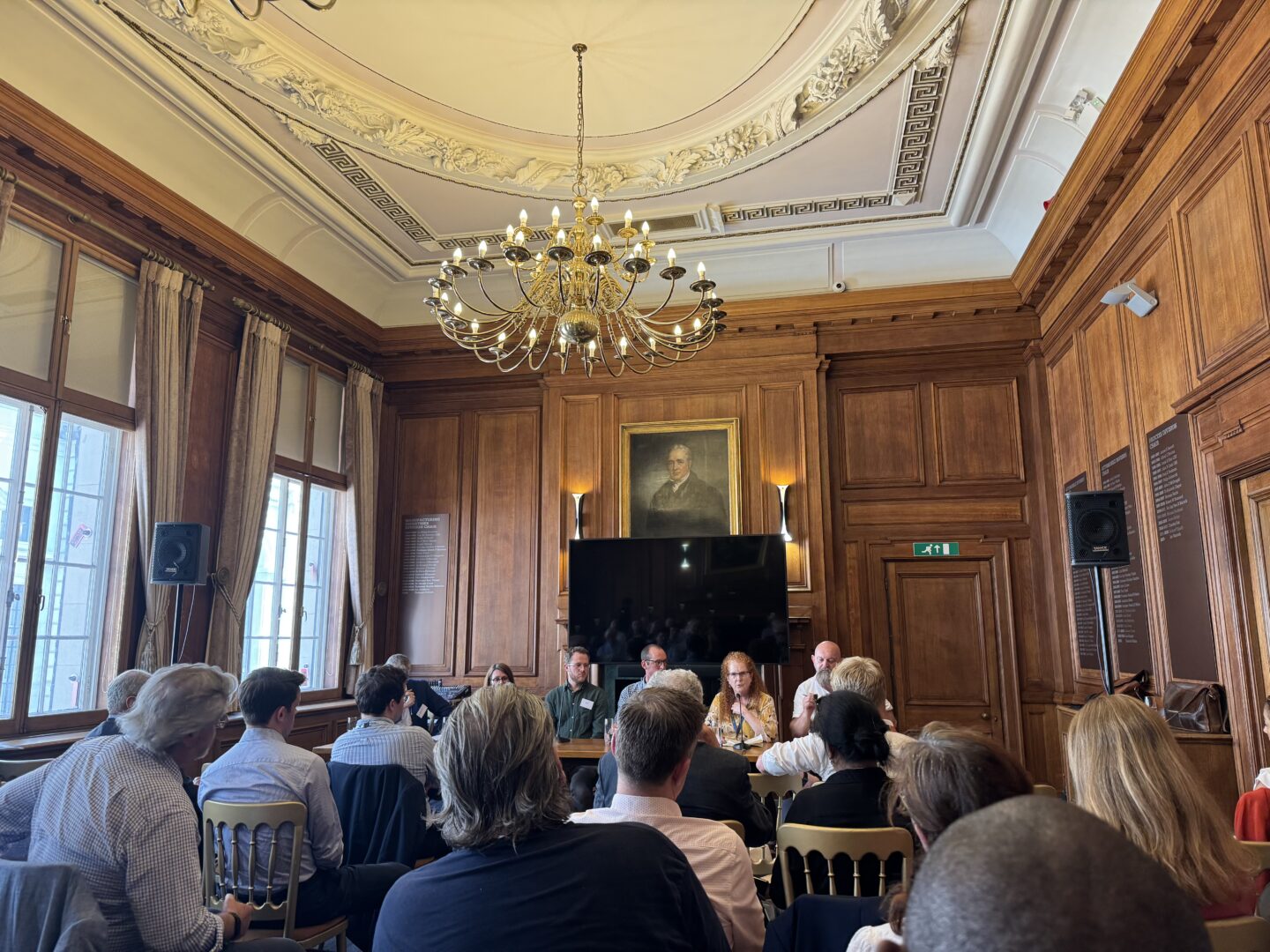
One of the week’s highlights for us was British Expertise International’s panel discussion, Is Climate Adaptation the New Common Ground?, featuring our colleague Dr Jolyne Sanjak on the panel. Across the week, key themes emerged from the events attended by Tetra Tech staff.
Whose voices shape climate adaptation?
A consistent message throughout the week was that the people with the greatest experience of climate adaptation must play a greater role in shaping solutions.
For Charles Reeve, a Senior Principal on our Economic Growth and Infrastructure team and our Climate Lead, this was the defining takeaway from the British Expertise International panel.
“The consensus from the panel (and audience) was that adaptation is the new common ground, but I was left feeling that this is only because the developed world is now feeling the impacts of climate change and realising we have to adapt.”
“Jolyne brought the dimension that the rest of the world has been doing this for years and that we need to find a way to learn from them rather than thinking we know everything. Once again we need to find a way for those who have been impacted for longest to play a leading role.”
That message resonated with Becca Fleming-Smith, Senior Manager for the Tetra Tech-managed Land Facility.
“We must do all we can to discuss climate beyond just how it is increasingly affecting the West. Whatever effects we are now feeling, have been disproportionately felt by those in the Global South for a long time.”
“I really valued hearing Jolyne voicing those perspectives and the need to have, for example, indigenous people at decision-making tables.”
Climate action needs broader leadership
Another recurring theme was that adaptation will require leadership well beyond governments. Becca reflected on “the short-sightedness of the political will for climate adaptation and mitigation, given that the returns on investment are so long term. It’s going to take other actors to take a lead – like the finance sector – and to coordinate better for action rather than relying on politicians to get us there.”
Dani Chance, Project Coordinator, reached a similar conclusion.
“Attempts to prevent the impacts of climate change are unlikely to progress without pressure from outside politics. Governments are weak drivers of the longer-term sustained action needed on mitigation and adaptation” and that “NGOs, civil society, the private sector and financial institutions will need to push the needle.”
Charles observed this broader shift from another perspective after attending discussions on climate, security and development.
“There seems to be an increasing school of thought that geopolitical change is because of climate change as countries seek resilience and security in areas such as food and energy. Could this mean that in the future international development will be provided by a country to ensure resilience and security from the impacts of climate change? If so, a very different approach to international development will be required.”
Adaptation must be rooted in people’s everyday realities
The discussions also reinforced that successful adaptation is ultimately about people, livelihoods and communities.
Dani reflected that “One key idea that stood out was the need to design climate responses around the realities of poorer communities, who are often left to deal with crises they did not create and have limited capacity to adapt.”
She highlighted an insurance project in Kenya that helped pastoralist communities recover from livestock losses while enabling children to stay in school, demonstrating how well-designed adaptation can deliver wider social and economic benefits.
The conversations also highlighted that adaptation is becoming an increasingly pressing issue in the UK.
“Poorer communities in the UK are likely to be at the forefront of climate impacts.”
From resilient infrastructure to schools, hospitals and housing, Dani felt the message was clear: adaptation must protect those least able to absorb the impacts of climate change, wherever they live.
LCAW reinforced the importance of bringing international development experience into climate conversations. Adaptation cannot simply respond to the challenges now being felt in higher-income countries; it must be informed by those who have been confronting climate risks for decades. As Charles reflected, “we need to find a way to learn from them rather than thinking we know everything.” That principle will continue to shape how we work with our partners to deliver locally led, resilient and inclusive development.